
HEAT RECOVERY VENTILATION:
fresh air without heat loss and extra costs
Modern construction technologies focus not only on comfort but also on energy efficiency. Traditional ventilation leads to significant heat loss: in winter, warm air escapes outside, and in summer, hot air enters, increasing the load on air conditioning. Heat recovery ventilation systems solve this problem by providing a constant supply of fresh air without significant heat loss or excessive energy consumption.
How does it work? The heat recovery unit captures heat (or cold) from the outgoing air and transfers it to the incoming airflow. This reduces heating and cooling costs while creating a comfortable indoor microclimate.
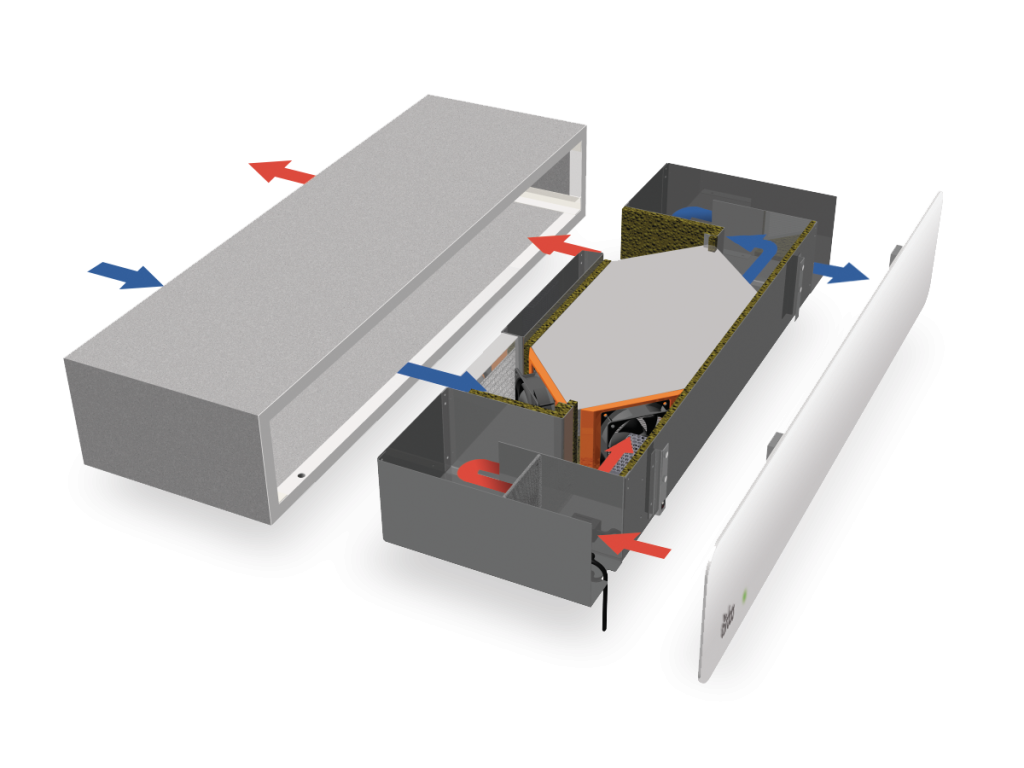
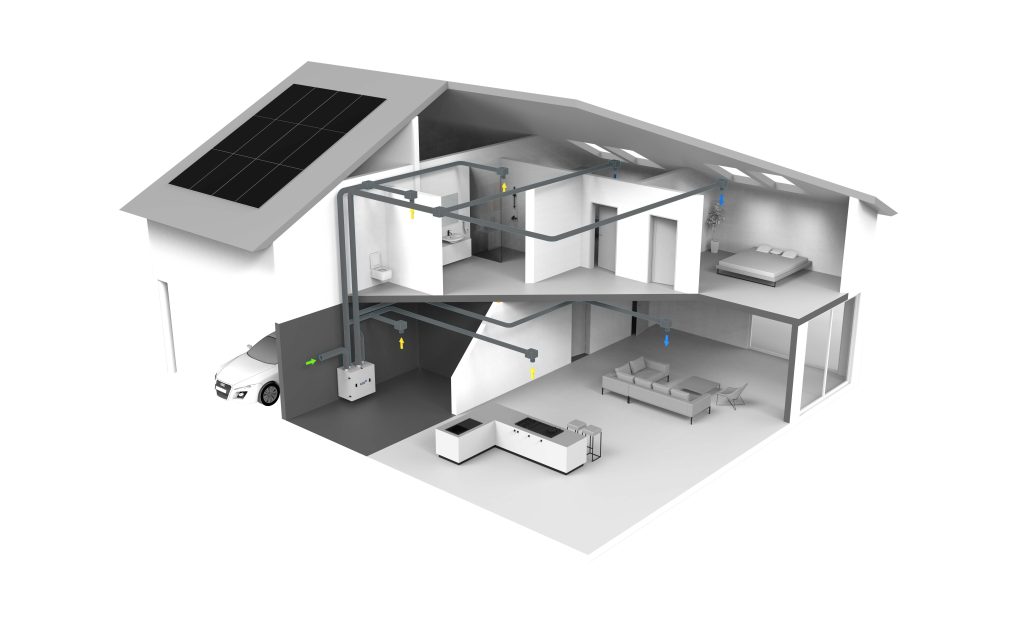
Types of heat recovery ventilation systems
There are several types of heat recovery units, differing in their operating principles and efficiency:
Plate Heat Exchangers
- No moving parts; heat is transferred through the plates of the heat exchanger.
- Do not require electrical connection.
- Simple design, but efficiency is limited to 70-80%.
Rotary Heat Exchangers
- Include a rotating rotor that accumulates and transfers heat.
- Efficiency up to 85%, high performance.
- Allow moisture transfer, reducing air dryness in winter.
Mixing Chambers (Bypass Systems)
- Part of the warm air mixes with the incoming cold airflow.
- Less efficient than plate and rotary heat exchangers.
- Good for systems where humidity must remain constant.
Liquid Heat Exchangers
- Use a heat carrier to transfer energy between air streams.
- Suitable for separated ventilation systems.
- Efficiency around 50-70%.
Enthalpy Heat Exchangers
- Retain both heat and moisture, preventing dry air.
- Good for residential spaces where comfortable humidity levels are important.
- Efficiency 80-90%.
The choice of system depends on the building’s characteristics, humidity levels, comfort requirements, and budget.
Advantages over traditional ventilation systems
- Energy efficiency – heat recovery reduces heat loss by 60–90%, lowering heating costs in winter and cooling costs in summer.
- Comfortable microclimate – air is refreshed without sudden temperature changes, eliminating drafts and discomfort.
- Clean air – built-in filters trap dust, allergens, exhaust gases, and pollutants.
- Optimal humidity – some types of heat exchangers retain moisture, preventing dry air in winter.
- Quiet indoors – unlike open windows, street noise does not enter the home.
- Reduced load on heating and cooling systems – ventilation does not remove heat or coolness from the home, lowering the demand on climate control systems.
Economic Benefit: Payback Period of Heat Recovery Ventilation
The main question when installing a system: how much can you save?
In traditional homes, up to 30–50% of heat loss occurs through ventilation. A heat recovery unit helps retain this energy.
Let’s compare the operating costs of a standard home and one with heat recovery:
| Parameter | Traditional Ventilation | Heat Recovery Ventilation |
| Heat loss through ventilation | 30–50% | 5–15% |
| Heating costs in winter | High | 25–40% lower |
| Cooling costs in summer | High | 20–30% lower |
| Comfort | Drafts, temperature swings | Even temperature, fresh air |
| Air quality | Outdoor dust, allergens | Air filtered and purified |
| Humidity level | Too dry in winter, too humid in summer | Optimal humidity balance |
When will the system pay off?
The average cost of a heat recovery ventilation system for a private home is approximately $2,500–5,000.
Annual savings on heating and cooling: ≈ $500–1,000.
Payback period: 3–7 years.
After that, the heat recovery unit starts generating net savings, reducing utility bills.
Why is it important to design the ventilation system in advance?
Air heat recovery is not just about installing equipment; it’s about integrating it into the overall engineering concept of the home.
Proper ventilation design allows you to:
- Choose the optimal type of heat recovery unit for your home.
- Accurately calculate air exchange to avoid insufficient or excessive ventilation.
- Integrate the heat recovery unit with heating, air conditioning, and smart home systems.
- Avoid costly mistakes and rework.
Pyramis offers a comprehensive approach to ventilation design. We analyze architecture, climate, and client preferences to create a system that truly works and saves money.
Where is this technology heading?
- More compact and efficient heat recovery units – modern devices take up less space and consume less energy.
- Integration with smart systems – ventilation control automatically adjusts based on CO₂ levels and humidity.
- Energy storage – new models not only save heat but also allow it to be used in other engineering systems.
Why choose heat recovery ventilation?
- Reduces heat loss and lowers heating bills.
- Creates a comfortable indoor climate without drafts or sudden temperature changes.
- Filters the air, protecting against dust, allergens, and exhaust fumes.
- Pays for itself in 3–7 years and continues to cut heating and cooling costs afterward.
- Compatible with smart home systems and modern heating solutions.
Pyramis designs and integrates heat recovery ventilation systems tailored to the specifics of each project. We know how to make your home comfortable, energy efficient, and cost-effective.
Looking to reduce your heating and cooling expenses?
We know how to do it right.
WE THINK AHEAD
We don’t just design engineering systems.
We create life infrastructure that works seamlessly, delivering maximum comfort, stability, and control.
If you're looking for solutions that will remain relevant not only today but also in the future — let’s talk about your project.