
DRAINAGE SYSTEM:
the key to stability, durability, and comfort in the home
Modern residential construction goes far beyond a stable foundation, solid walls, and quality materials. Without a properly designed drainage system, all investments in a strong structural frame — and more — can prove pointless.
Drainage plays a crucial role in protecting the foundation, preventing flooding, maintaining a healthy indoor climate, and even preserving the surrounding landscape.
Without an effective drainage system, water can become a serious threat to your home, leading to soil subsidence, structural damage, mold growth, and increased indoor humidity.
Types of Drainage Systems
The choice of a drainage system depends on the characteristics of the site, soil type, and groundwater level. There are several main types of drainage systems:
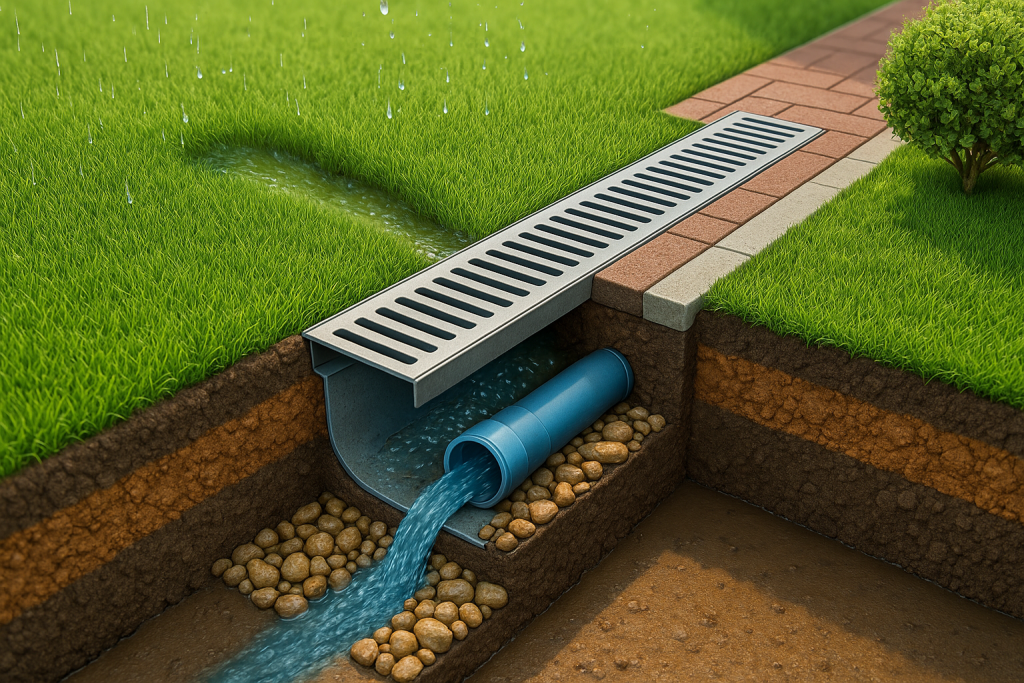
1. Surface Drainage
Used to divert rain and meltwater from the site. Includes:
- Linear drainage – a system of channels, trays, and grates that collects and removes water from the area.
- Point drainage – localized drains placed in areas where water accumulates (under downspouts, near entrances, on paved paths).
2. Deep (subsurface) drainage
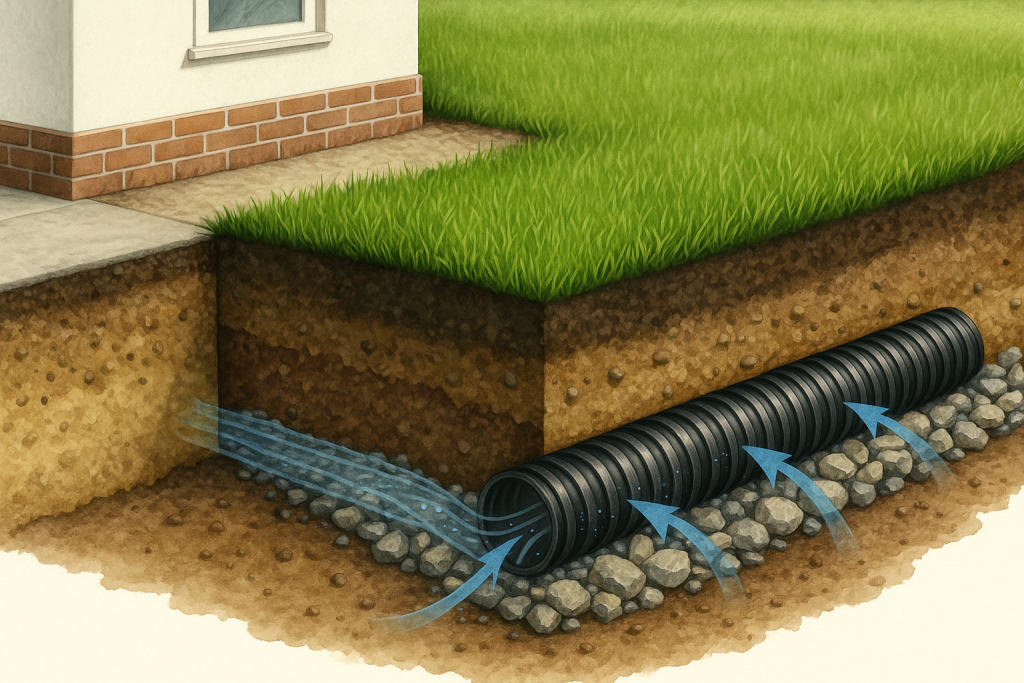
Protects the foundation and basement areas from groundwater penetration. Includes:
- Ring drainage – pipes laid around the perimeter of the building to divert water away from the foundation.
- Wall drainage – installed directly along the foundation to protect basements and underground rooms.
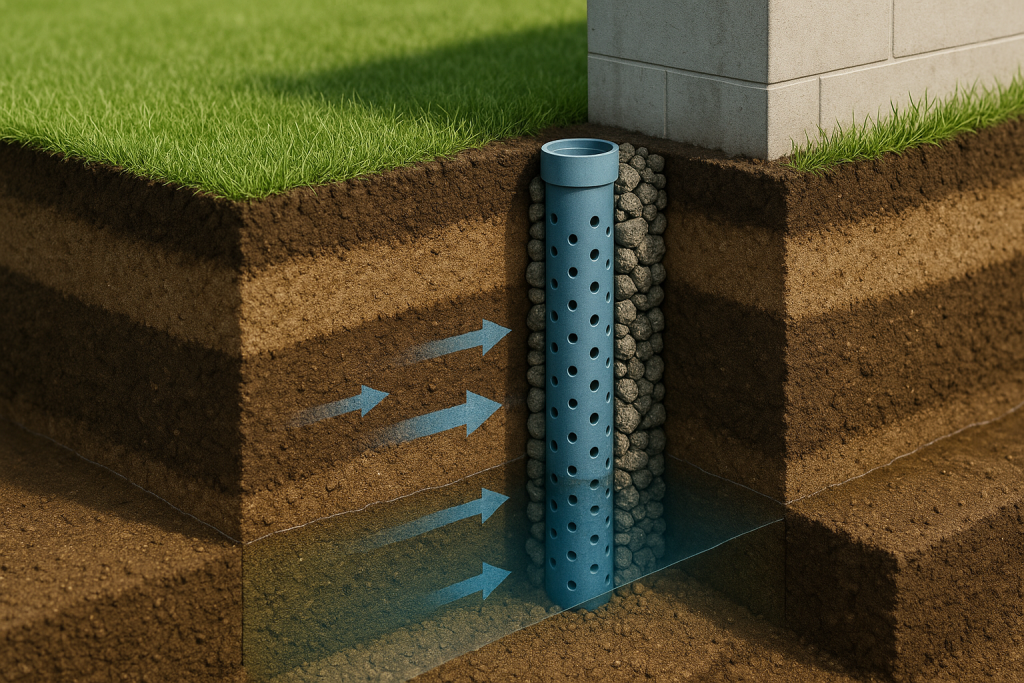
- Radial drainage – used on complex terrain to redirect water from the center to the periphery. Applied in areas with high groundwater levels. Includes drainage wells that allow water to seep into deeper soil layers.
3. Vertical drainage
Used in cases of high groundwater levels. Includes drainage wells that allow water to seep into deeper soil layers.
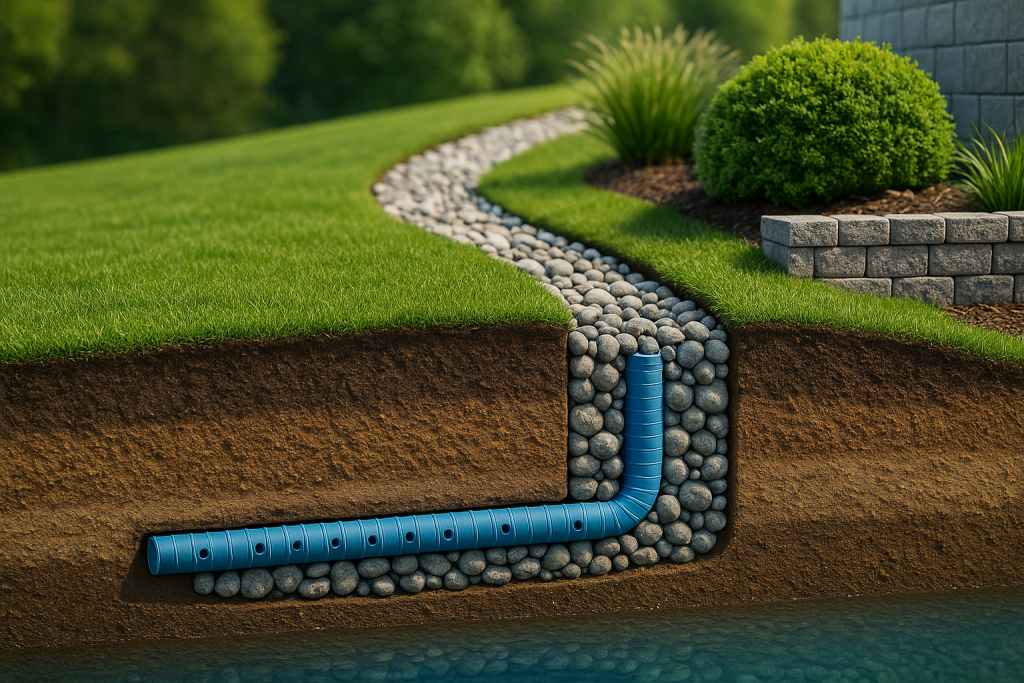
4. Landscape drainage
Helps maintain soil stability and prevents erosion. This is especially important for sloped areas.
How Does a Drainage System Affect the Stability and Durability of a Building?
Prevention of Settling and Cracks
Water accumulating in the soil creates hydrostatic pressure, which over time can lead to foundation deformation and the appearance of cracks.
Protection Against Wall and Plinth Moisture
Without drainage, moisture gradually rises through the capillaries of the walls, causing finish deterioration, mold growth, and loss of thermal insulation properties.
Stability of the Temperature Regime
Dry soil around the building better preserves thermal insulation properties, reducing heat loss and helping maintain a comfortable indoor temperature.
Impact of Drainage Systems on the Indoor Microclimate
A properly organized water drainage system prevents moisture accumulation in the premises, which means it affects:
- Prevention of dampness – reducing humidity in walls and ceilings.
- Protection against mold and mildew – they develop in conditions of high humidity.
- Comfortable microclimate – stable air humidity without sharp fluctuations.
- Energy efficiency – dry structures retain heat better, reducing heating costs.
How does Pyramis design effective drainage systems?
The company Pyramis pays special attention to water drainage issues. We analyze:
Geological conditions – groundwater level, soil type, climatic features.
Building architecture – basement, foundation, site location.
Landscape – terrain, soil drainage properties, location of water bodies.
Based on this data, we select the optimal solution that ensures foundation protection, building durability, and a comfortable atmosphere inside the home.
Where is this technology heading?
Smart drainage systems – humidity and water level sensors that control pumps depending on the weather.
Combined solutions – integration of drainage with stormwater sewer systems, irrigation systems, and green roofs.
Energy efficiency – use of drainage water for irrigation or household needs.
Technologies are evolving, and a well-designed drainage system is becoming an integral part of a smart, eco-friendly, and durable home.
Are you building a house? Don’t forget about drainage!
Drainage is an essential part of quality construction. It prevents problems, enhances comfort and energy efficiency, and extends the building’s lifespan.
Pyramis knows how to design and implement a drainage system that will work for decades, protecting your home and creating a healthy microclimate.
Want your home to be reliable and comfortable? We know how to make it happen.
WE THINK AHEAD
We don’t just design engineering systems.
We create life infrastructure that works seamlessly, delivering maximum comfort, stability, and control.
If you're looking for solutions that will remain relevant not only today but also in the future — let’s talk about your project.