
intelligent building management systems:
comfort, savings, and the future of modern construction
Modern technologies enable automatic, predictable, and efficient home management. Building management systems (BMS) integrate all engineering solutions into a unified ecosystem, creating maximum comfort, reducing operational costs, and improving energy efficiency.
A true modern home is a dynamic system where heating, ventilation, lighting, security, and water supply work in harmony. That is why smart design and implementation of intelligent control systems have become an essential part of modern construction.
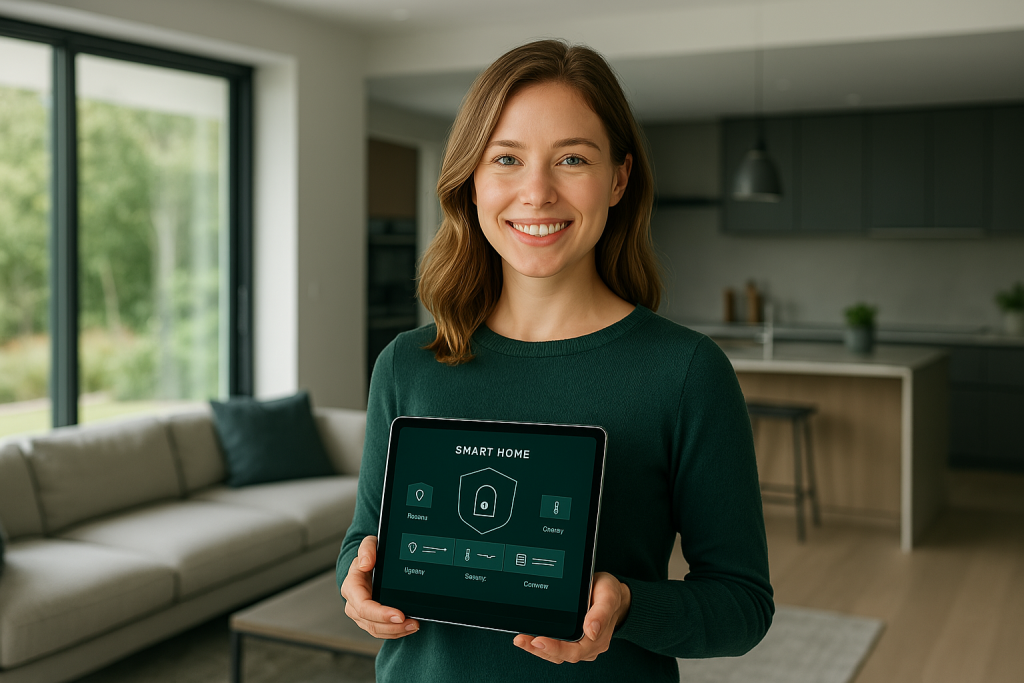
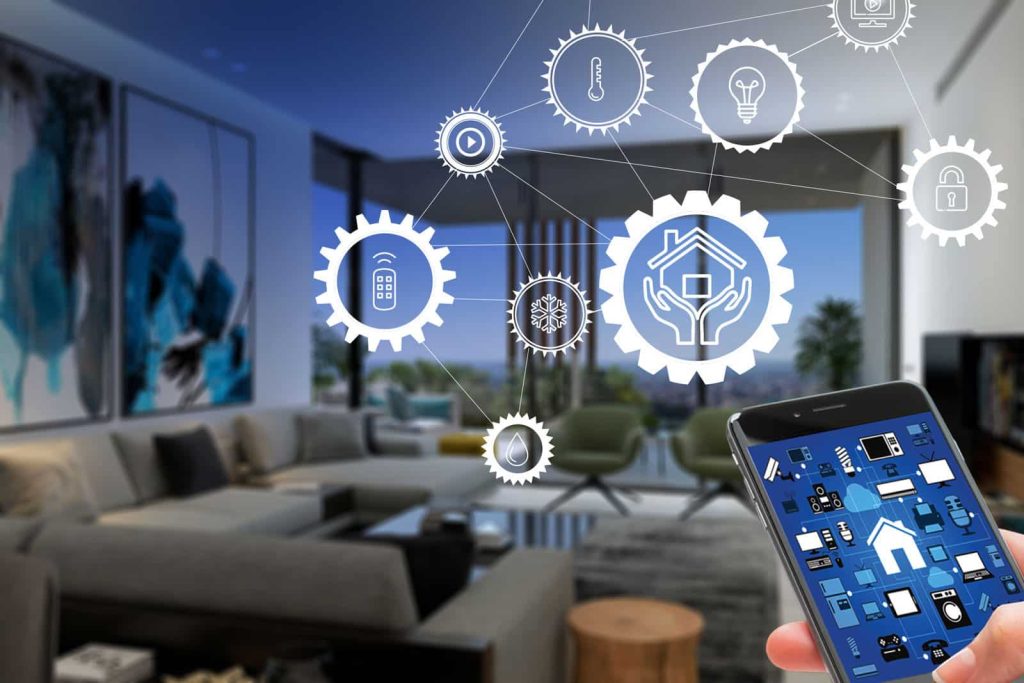
What is an intelligent building management system?
An intelligent management system is a set of equipment and software that allows automation and optimization of all engineering systems in a home.
What does a BMS include?
- Climate control — automatic management of heating, air conditioning, and ventilation.
- Lighting — scene-based light control, automatic brightness adjustment.
- Security — video surveillance, access control, motion sensors, alarm system.
- Energy efficiency — monitoring resource consumption, energy management.
- Water supply management — leak protection, temperature and pressure control.
- Integration with alternative energy sources — solar panels, geothermal pumps.
Why is it important? Advantages of intelligent management systems
Energy savings
An intelligent system adapts the operation of all engineering solutions to actual usage scenarios, eliminating excessive costs for heating, lighting, and air conditioning.
Comfort and convenience
The house automatically adjusts to conditions, including climate control and lighting, without the owner’s intervention.
Safety
Real-time management of security systems, video surveillance, and access through a smartphone. The ability to control engineering systems without human involvement.
Eco-friendliness
Efficient resource use reduces environmental impact.
Economic benefits:
smart home management vs. traditional home
Cost savings are one of the main factors when choosing technologies for a home. Let’s compare the operating expenses of a traditional house and a house with a BMS.
| Parameter | Conventional house | House with intelligent system |
| Heating and air conditioning costs | High, depend on continuous system operation | Reduced by 30-50% thanks to automatic control |
| Electricity consumption | Manual control, operates all day | Energy consumption optimization, cost reduction by 20-40% |
| Lighting | Lights stay on even when no one is present | Motion sensors, adaptation to daylight – savings up to 30% |
| Water supply | Possible leaks and overconsumption | Leak control, automatic water shutoff – loss reduction up to 90% |
| Comfort | Need to manually control temperature and lighting | Everything works automatically, climate adapts to residents’ habits |
| Payback period | No additional investments but constant expenses | System investments pay off in 3-5 years due to resource savings |


Conclusion: an intelligent management system significantly reduces house operating costs and pays off quickly.
Design: the key to effective integration of engineering systems
To ensure that intelligent management works effectively, it is important to develop design documentation at the construction stage.
Why can’t the system just be installed “after the fact”?
- Separate systems (heating, ventilation, electricity) may conflict with each other.
- A non-integrated approach increases the cost of revisions and integration.
- The system may turn out to be excessive or insufficiently efficient if all factors are not considered.
How does Pyramis design intelligent systems?
- Needs analysis – adaptation to the client’s lifestyle.
- Integrated design – a unified ecosystem of engineering solutions.
- Cost optimization – selection of solutions that deliver real economic impact.
- Future scalability – readiness for integration of new technologies over time.
Where is this technology heading?
- Artificial intelligence – systems independently analyze the behavior of residents and optimize energy consumption.
- Integration with green buildings – smart homes are increasingly designed as autonomous energy-efficient systems.
- Voice and gesture control – management through smart assistants and motion sensors.
- Next-generation energy grids – homes capable of storing and returning energy to the grid.
Smart home technologies are evolving rapidly, and Pyramis knows how to adapt them to real construction conditions today.
A smart home is an investment in comfort and the future.
Intelligent management systems make a home more comfortable, safer, and more energy-efficient. They reduce operating costs, increase property value, and allow advanced technologies to be integrated today.
Pyramis understands which solutions truly work and offers a comprehensive approach to engineering system design.
If you want your home to be modern, economical, and technology-driven — we know how to make it happen.
We design the future today!
WE THINK AHEAD
We don’t just design engineering systems.
We create life infrastructure that works seamlessly, delivering maximum comfort, stability, and control.
If you're looking for solutions that will remain relevant not only today but also in the future — let’s talk about your project.