
Hydronic radiant cooling:
energy-efficient comfort in the summer months
Modern buildings require smart and efficient solutions to maintain a comfortable indoor climate. Hydronic radiant cooling is an advanced system that provides gentle, silent, and energy-efficient temperature reduction indoors without the use of traditional air conditioners.
What is hydronic radiant cooling?
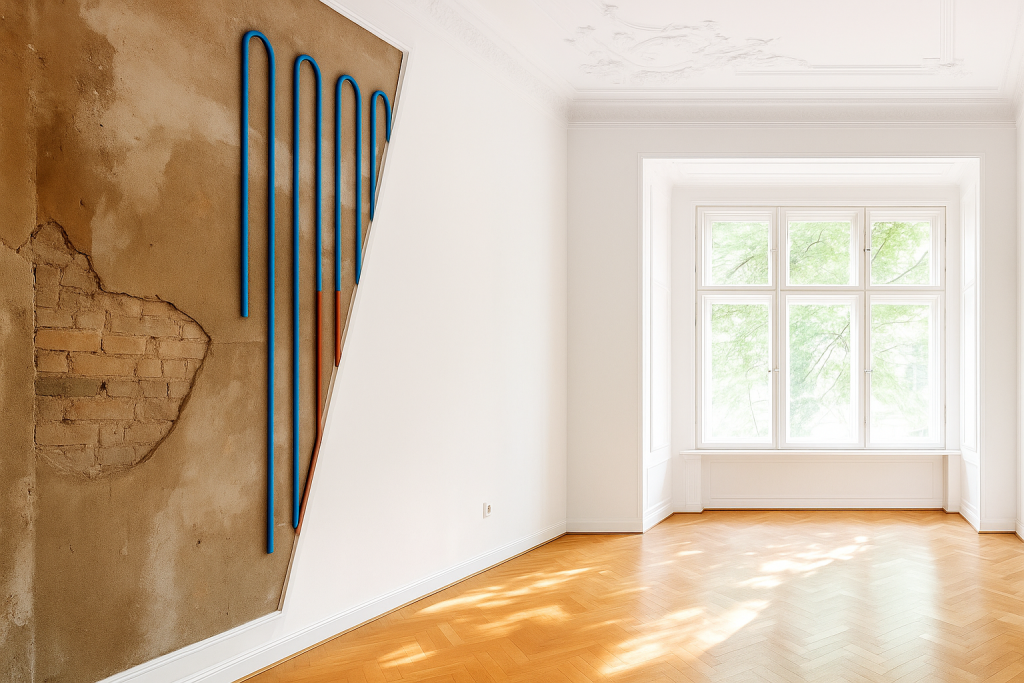
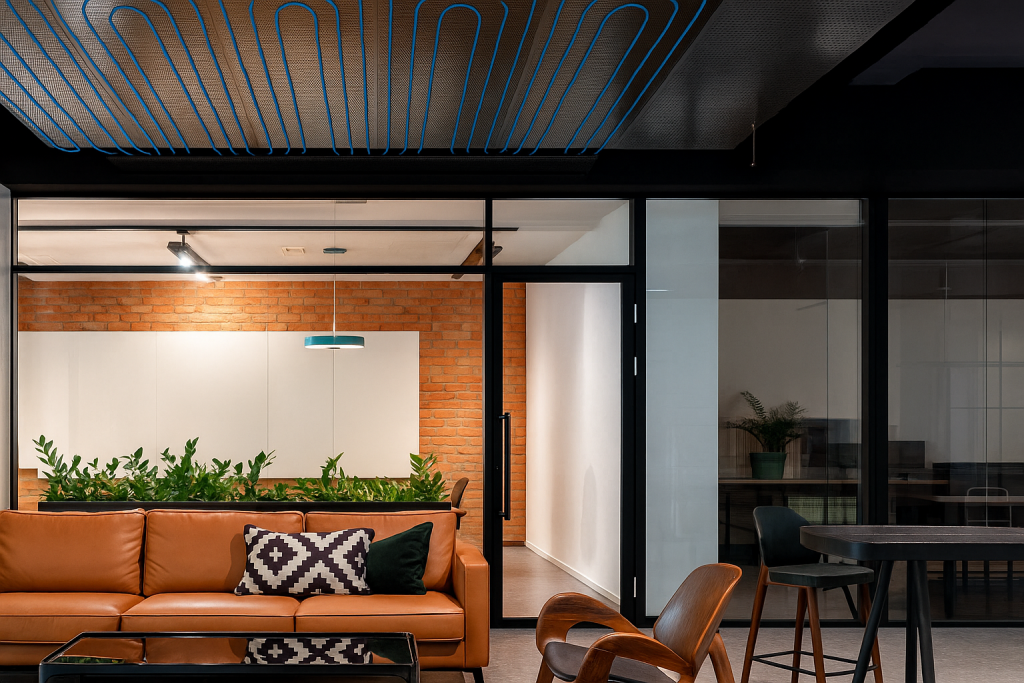
Hydronic (liquid-based) radiant cooling is a system in which chilled water circulates through pipes embedded in walls, ceilings, or floors, absorbing heat from the room and ensuring a comfortable indoor climate. Unlike air conditioners, which cool the air, radiant systems operate on the principle of thermal radiation, transferring coolness through surfaces.
Why is this important?
- Energy efficiency – consumes 30–50% less energy than traditional air conditioners.
- Silent operation – the absence of fans makes the system virtually unnoticeable.
- Better air quality – does not circulate dust and allergens, reducing the risk of respiratory diseases.
- Compatibility with green energy – easily integrates with solar panels and geothermal systems.
- Aesthetics and comfort – no bulky air conditioners, and the air does not become overly dry.
- Increased property value – improves building energy efficiency in line with modern standards.
Where is it used?
- Private homes and cottages – provide natural cooling without drafts or noise.
- Luxury residential complexes and hotels – create comfort for guests and increase property value.
- Office and commercial buildings – reduce electricity costs and improve working conditions.
- Museums and galleries – maintain a stable microclimate without creating air currents that could damage exhibits.
How does Pyramis use this technology?
The Pyramis team integrates hydronic systems individually for each project, focusing on the climate, architectural features, and the needs of the owners. It is important to note that the use of hydronic cooling systems must be determined at the design stage of the building, as their installation often requires significant modifications to walls, floors, or ceilings.
- For private houses – we design ceiling and floor systems that provide natural cooling without drafts.
- For energy-efficient cottages – we combine radiant cooling with geothermal pumps, increasing the building’s autonomy.
- For buildings with solar energy systems – we use hybrid solutions that reduce the load on the power grid.
We don’t just install cooling systems – we design them according to your lifestyle, taking into account all engineering nuances.
Where Is this technology headed?
- Integration with Intelligent Systems – Temperature control via AI and IoT.
- Use of Phase Change Materials – New cold storage technologies for even greater energy savings.
- Expanded Applications – Hydronics is increasingly used in mass construction instead of traditional air conditioning.
Pyramis understands how these technologies will transform the market and is already offering clients solutions for the future today.
Do you want to make your home cool, energy-efficient, and comfortable? Pyramis knows how to integrate hydronic radiant cooling to maximize benefits for you. We will select the optimal solution, taking into account your project and modern technologies.
WE THINK AHEAD
We don’t just design engineering systems.
We create life infrastructure that works seamlessly, delivering maximum comfort, stability, and control.
If you're looking for solutions that will remain relevant not only today but also in the future — let’s talk about your project.